

Paying per diem means giving employees a daily allowance to cover travel-related costs such as meals, lodging, and other incidental expenses. This approach simplifies your expense management, enhances budget control, and improves employee satisfaction.
In this guide from Rocket Bookkeeper, we’ll explain what per diem means, how it works, the different types of per diem payments, and how it impacts payroll and tax compliance.
What Does Paying Per Diem Mean?
The term “per diem” comes from Latin, meaning “per day.” In business, it refers to two things:
- Hiring per diem employees – Hiring temporary or part-time workers on a daily basis without a long-term contract.
- Paying per diem allowances – Providing employees with a fixed daily amount to cover expenses during business trips.
At Rocket Bookkeeper, we often see small business owners benefit from adopting the per diem system—it saves time, improves cash flow predictability, and reduces paperwork.
How Paying Per Diem Works (A Simple Example)
Imagine you own a restaurant that’s sending your Head Chef to participate in a food festival out of town. Instead of reimbursing every meal and hotel receipt, you decide to give them a daily allowance—a per diem.
This daily rate covers all necessary travel expenses, allowing your chef to focus on the event while your accounting stays organized.
That’s the power of the per diem method—it simplifies financial management and creates transparency between employers and employees.
Common Types of Per Diem Payments
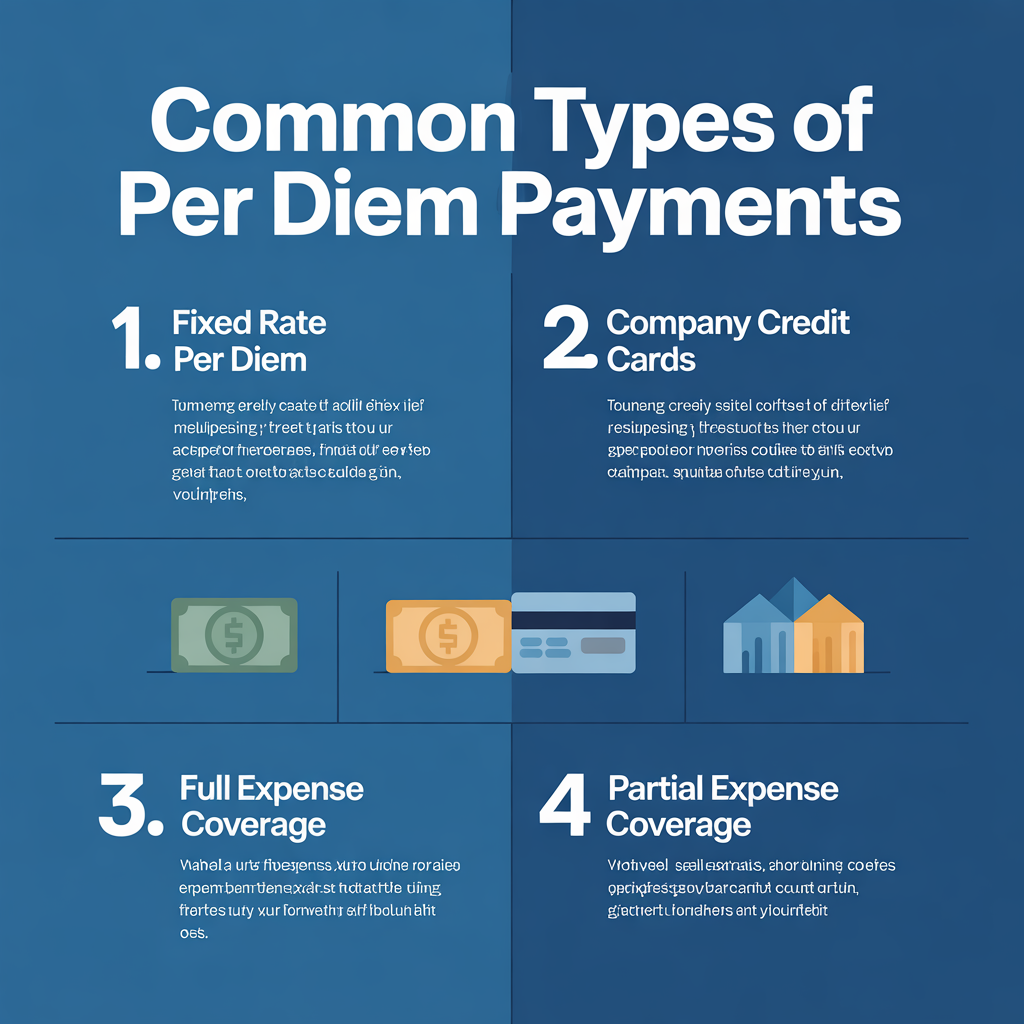
Businesses use different approaches to handle per diem expenses depending on their size and structure. Here are the most common types:
1. Fixed Rate Per Diem
A set daily allowance is provided to cover meals, lodging, and other costs.
Example: You offer $70 per day to employees traveling for work.
This helps you predict costs and avoid sorting through hundreds of receipts later.
2. Company Credit Cards
Many businesses issue company credit cards for per diem employees to pay directly for meals and lodging.
Benefits:
- Simplifies expense tracking
- Reduces reimbursement paperwork
- Keeps spending under company control
However, it’s essential to create clear usage policies to prevent misuse and maintain financial integrity.
3. Full Expense Coverage
Under this model, employers reimburse all travel expenses up to the approved per diem rate.
This is convenient for employees but increases the employer’s financial responsibility.
4. Partial Expense Coverage
Here, the business reimburses a portion of the per diem rate—for example, 75%—and the employee covers the rest.
This approach helps businesses control costs while still supporting employee travel needs.
Benefits of Paying Per Diem
Paying per diem offers multiple advantages for both employers and employees:
✅ Cost Predictability
Fixed daily rates make it easier to forecast and manage travel budgets.
✅ Simplified Expense Management
Per diem eliminates piles of receipts and manual reimbursements, saving time for your bookkeeping team.
✅ Expense Control
Setting daily rates helps prevent overspending and keeps travel expenses within company policy.
✅ Tax Advantages
If structured correctly, per diem allowances are non-taxable, benefiting both the employer and the employee.
Does Paying Per Diem Complicate Payroll?
While per diem simplifies expense tracking, it can add complexity to payroll and tax compliance if not handled properly. Here’s how:
1. Record Keeping
You must maintain accurate records of who receives per diem, for how long, and for what purpose.
2. Payroll Integration
Your bookkeeping or payroll software should have specific codes for per diem payments—separate from regular wages.
3. Tax Implications
If your per diem rates exceed federal limits or aren’t properly documented, the excess may become taxable income.
4. Compliance by State
Each U.S. state may have unique rules for per diem payments.
Example:
- California: Some per diem payments may be included when calculating overtime.
- Texas: Per diem strictly for travel is excluded from overtime calculations.
That’s why many small business owners trust Rocket Bookkeeper to handle payroll accuracy, expense tracking, and compliance—so they can focus on running their business without worrying about penalties.
General Services Administration (GSA) Per Diem Rates
The GSA sets standard per diem rates each year as guidelines for meals and lodging costs.
For FY 2024, the GSA per diem rates are:
- Meals: $59
- Lodging: $79
Businesses can choose to pay higher rates, but anything exceeding GSA limits may be taxable to employees.
The Bottom Line
Paying per diem is more than just a financial policy—it’s a tool that supports employee satisfaction and keeps your business finances organized.
By giving your employees predictable, tax-efficient travel allowances, you simplify your bookkeeping, payroll management, and budgeting.
At Rocket Bookkeeper, we help small businesses across the USA manage per diem tracking, reimbursements, and payroll integration—ensuring compliance and accuracy every step of the way.
Let us handle your numbers so you can focus on growing your business.
Talk to a Bookkeeping Expert Today
Simplify your payroll and travel expense tracking with Rocket Bookkeeper — your trusted partner for accurate bookkeeping and compliance.
FAQs About Per Diem Payments
1. Is per diem taxable?
Per diem payments are not taxable if they don’t exceed federal GSA rates and are properly documented.
2. How does per diem work?
Employees receive a fixed daily allowance to cover travel-related expenses like meals and lodging.
3. What is the per diem rate?
The per diem rate is the daily amount paid to cover travel costs, set by the employer or GSA guidelines.
4. What if I pay more than the GSA rate?
Any amount above GSA limits becomes taxable income for the employee.
5. How can Rocket Bookkeeper help?
We handle expense management, payroll integration, and tax compliance to ensure your per diem system runs smoothly.